A door that closed fine in March drags on the frame by August in Lincolnton, and the reason is usually not the door. It is Carolina humidity. Wood absorbs moisture from humid air and swells, mostly across its width, and a door that had a tight but workable margin in dry winter air runs out of room in summer.
Before anyone reaches for a plane, work the checks in order. Most sticking doors are hinge problems wearing a humidity costume, and planing a door that actually has a loose hinge removes wood you cannot put back when the door shrinks again in January.
What August does to a door
A typical interior door can swell noticeably across its width between the driest winter week and the most humid stretch of summer. Painted edges swell less than bare wood, which is why the unpainted top and bottom edges of many doors are the hidden culprit: they were never sealed, so they drink moisture all summer. The frame moves too, and on exterior doors the threshold and weatherstripping add their own friction.
The pattern tells you a lot. A door that sticks only in summer and frees up in winter is showing seasonal movement. A door that sticks all year, or started sticking suddenly, points to hardware, a shifted frame, or a house that has settled. Seasonal sticking calls for patience and small adjustments; year-round sticking calls for diagnosis.
Sticking door checks, in order
- Find the contact point. Close the door slowly and watch where it meets the frame. Pass sign: an even gap of about an eighth of an inch on the top and latch side. Fail sign: paint worn shiny or bare at one spot.
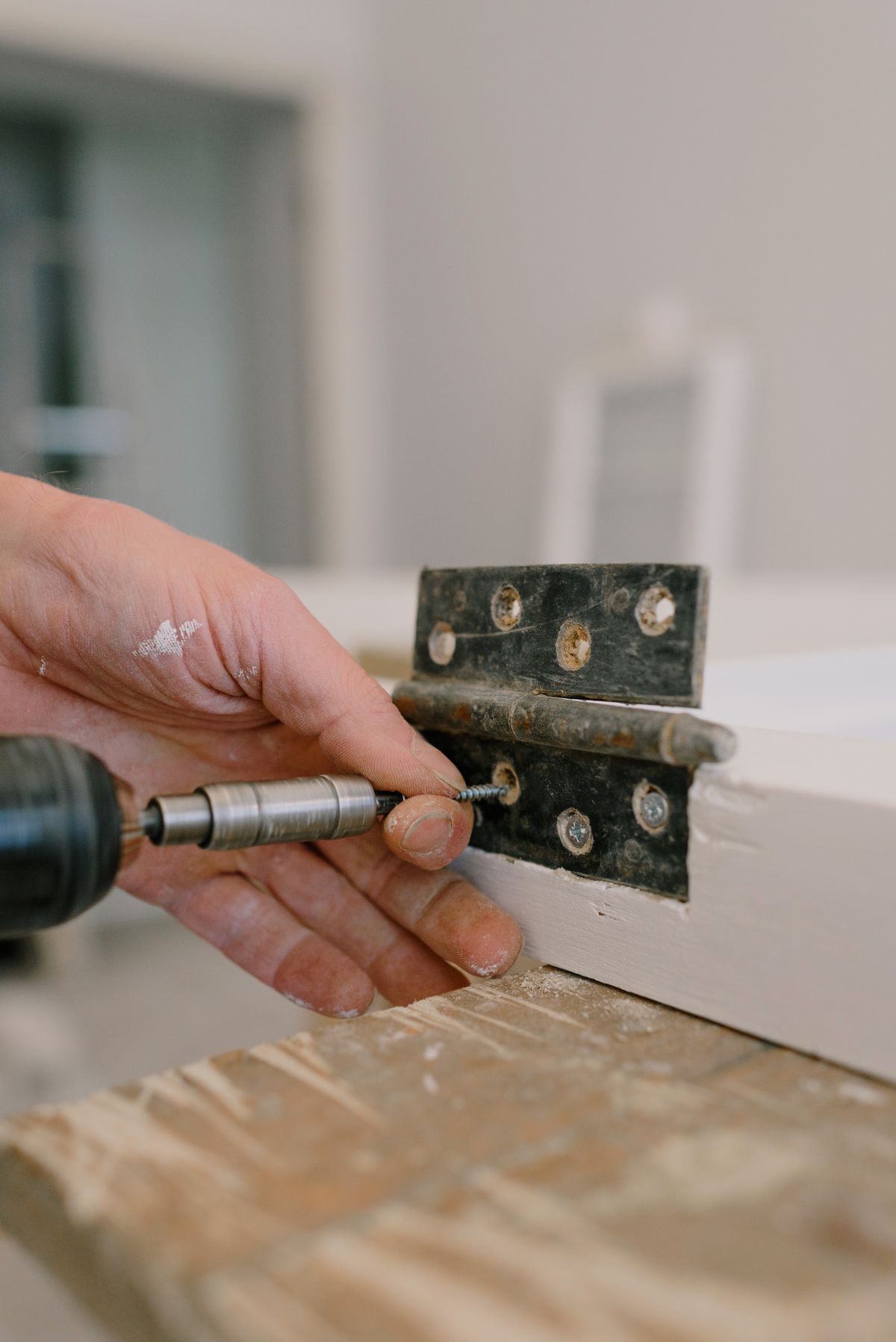
- Check the hinge screws. Open the door and try each screw in the top hinge with a screwdriver. Fail sign: any screw that spins or pulls loose in stripped wood, which lets the door sag into the frame.
- Run the long-screw fix. Replace one short hinge screw in the top hinge with a long screw that reaches the framing stud. Pass sign: the door pulls up and the gap evens out as you tighten it.
- Test the latch alignment. If the door closes but the latch misses or needs a lift by the knob, the sag is still there. Fail sign: strike marks above or below the strike plate opening.
- Look for paint buildup. Decades of paint on the door edge and frame add real thickness. Fail sign: a visible ridge of layered paint exactly where the door contacts.
- Check the unpainted edges. Run a hand along the top and bottom of the door. Fail sign: bare, rough wood that has never been sealed, drinking summer moisture.
- Only then consider the plane. If hinges are tight, gaps are even, and one edge still rubs, mark the rub zone in pencil. Pass standard: remove as little as possible, and seal the planed edge with paint or finish the same day.
The screw trick, explained
Most hinge screws are short and bite only into the door frame, which is a thin piece of wood. Over years of the door's weight pulling on the top hinge, those screws loosen in their holes and the door drops a fraction of an inch, enough to rub at the top latch corner and drag at the threshold. A single long screw through the top hinge, long enough to reach the wall stud behind the frame, pulls the whole frame and door back into line. It takes five minutes and removes no wood, which is why it always comes before the plane.
For a screw that spins in a stripped hole, pack the hole with wood glue and a few wooden matchsticks or a golf tee, let it set, trim it flush, and re-drive the screw. That restores bite without moving the hinge.
When it is not humidity
Call it something else if a door sticks in one corner with a crack running diagonally in the drywall above it, if several doors in the same part of the house started sticking together, or if the sticking arrived with a plumbing leak or a wet crawl space. Those patterns point to framing or moisture problems bigger than the door. Doors, locks, and hardware are among the services listed by Bullock Home Repair, and a sticking door is a reasonable thing to add to a wider repair list.
Common questions
Should I plane a door that only sticks in summer?
Usually not as a first move. Check and tighten the hinges first, and if planing is needed, take off very little, since the door will shrink back in winter and can end up with a loose gap.
Why does my door stick at the top corner?
That pattern almost always means the door is sagging from a loose top hinge. The long-screw fix into the stud corrects the sag without removing any wood.
Does sealing the top and bottom edges really help?
Yes. Those edges are often left bare when a door is painted in place, and bare wood absorbs the most moisture. Sealing them slows the summer swell noticeably.
Photos in this guide are representative stock images.
← All guides from Bullock Home Repair← Back to Bullock Home Repair